More context for the portfolio review
Managers needed a clearer view of asset allocation and diversification alongside the information already available
web product · investments · 2022–2025
Designing investment tools
for high-net-worth clients and their managers
 The challenge
Sber’s relationship managers reviewed investments with premium clients as part of a wider financial planning meeting. The manager operated the tablet; the client followed the screen and discussed the plan.
The existing tool showed holdings, risk information and a draft of proposed changes. Managers still relied on explanations, presentations and other materials to connect those changes to the client’s goals.
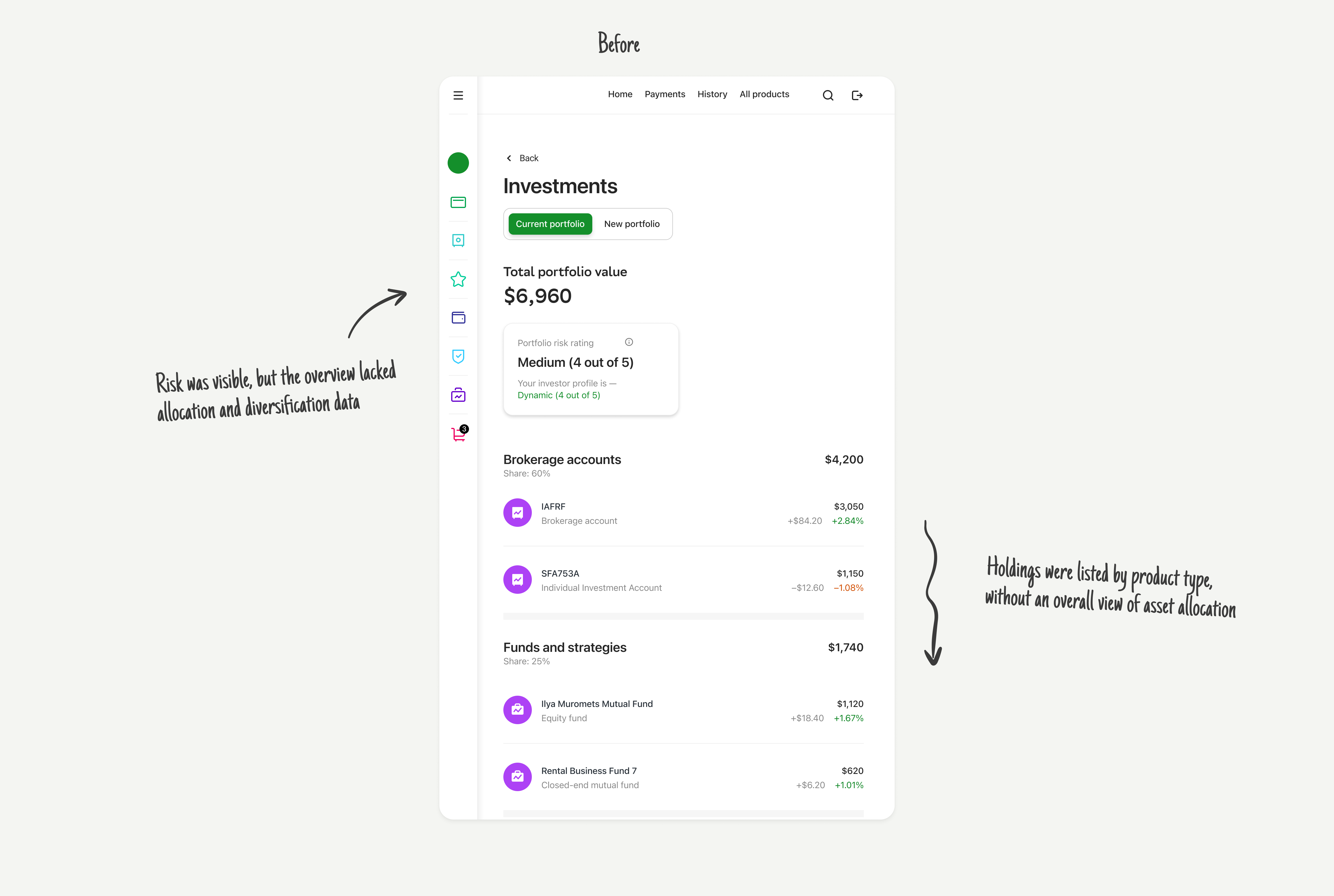
Managers needed a clearer view of asset allocation and diversification alongside the information already available
Clients could see existing investments and proposed changes, but had no visual reference for the portfolio they were working towards
Managers started with a needed asset class, then considered ways to invest in it. Product discovery needed to follow that logic.
Reviews took place at least every six months, in the office or elsewhere. Our team owned the investment planning part of the broader consultation.
I was the team’s sole product designer. With the PM and analysts, I observed consultations in branches and gathered feedback from managers and their leads, in person and through chat. I designed the portfolio, goal-setting and catalogue interfaces in close collaboration with analysts and engineers.
Portfolio overview
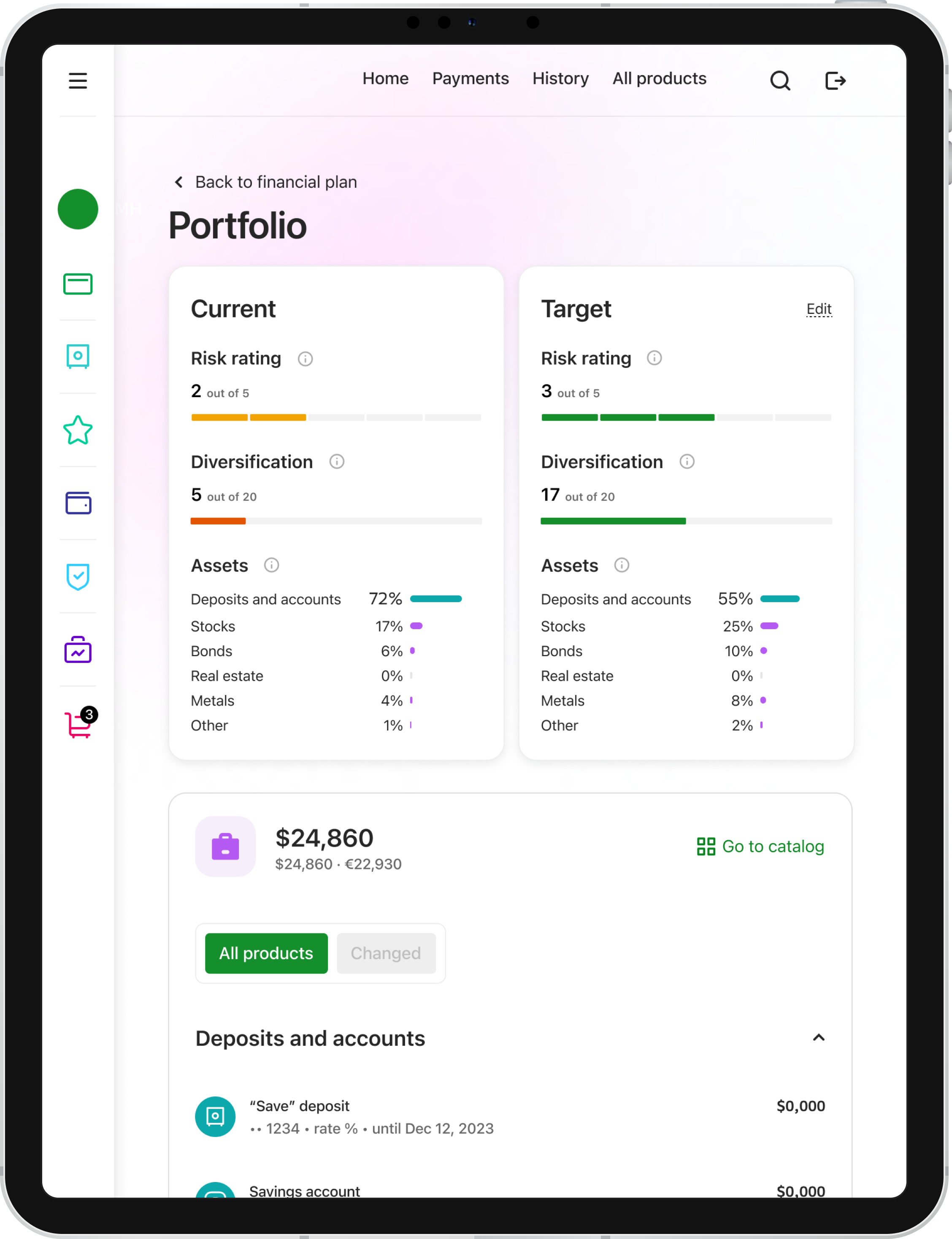
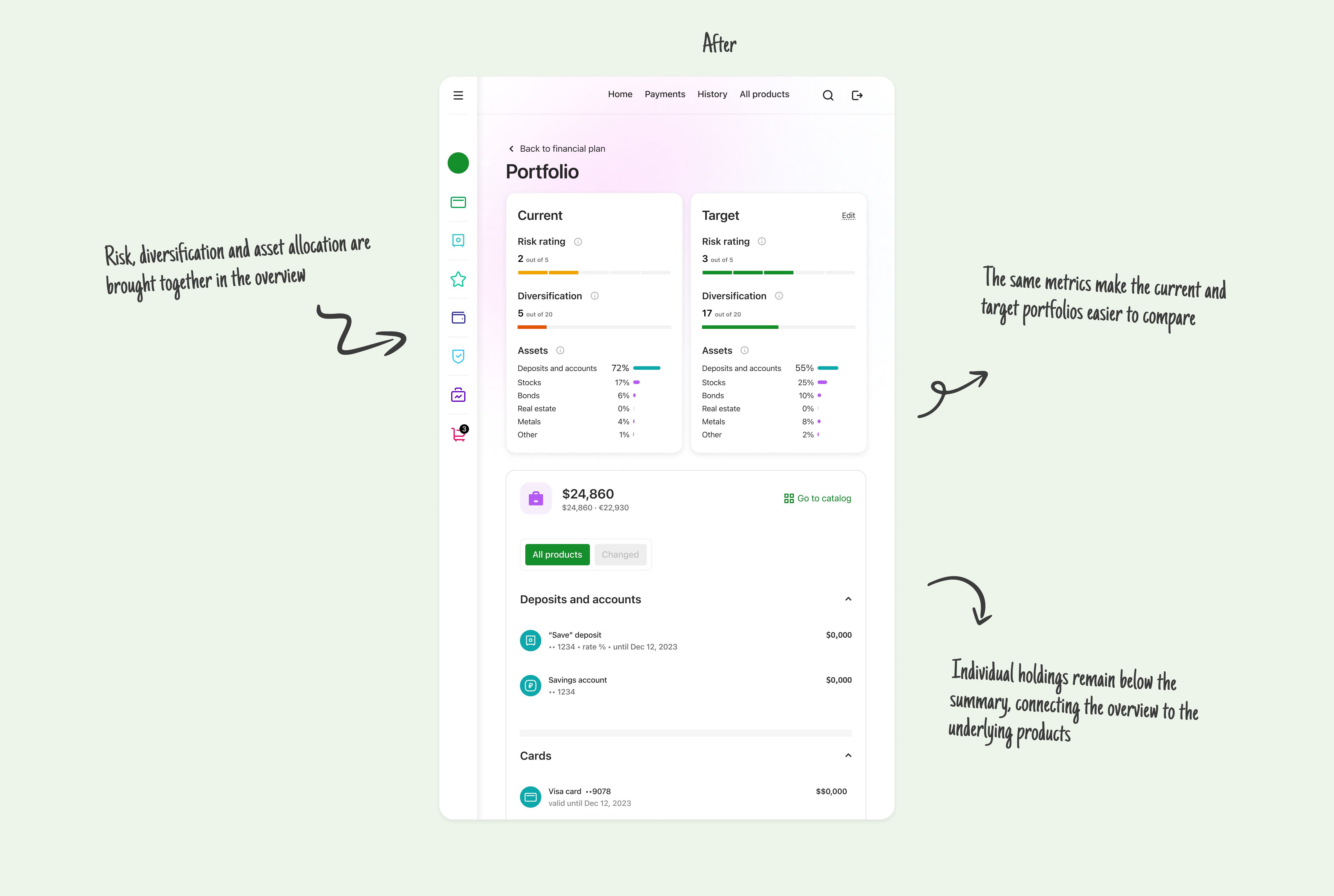
Manager feedback pointed to a need for more portfolio-level information. I expanded the overview to show asset allocation and diversification alongside the existing risk information.
The summary gave the manager and client a shared view of the portfolio’s structure, with individual holdings below. The manager could use it to explain how the client’s investments were distributed.
Goal calculator & target portfolio
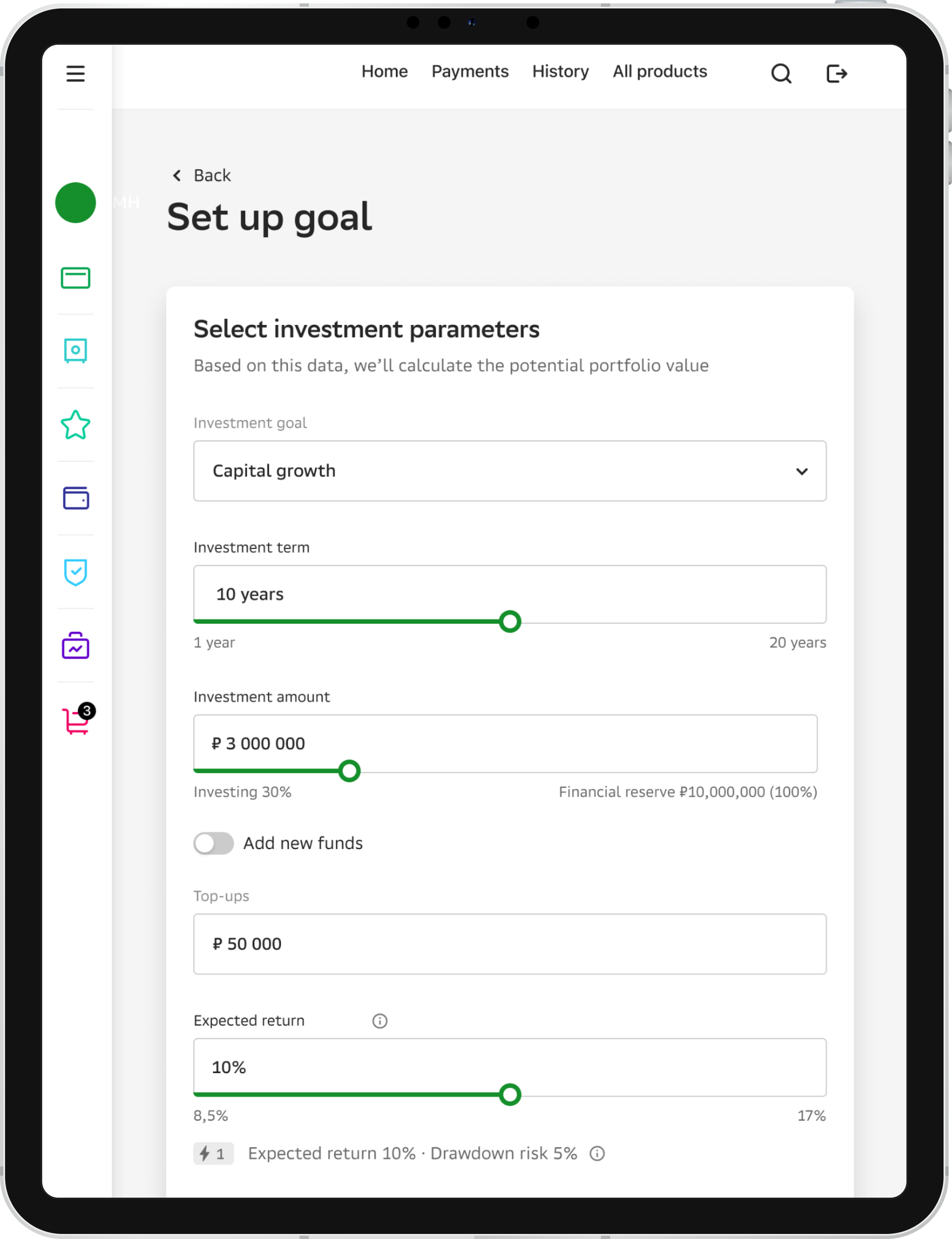
We saw that managers already started with the client’s goal. I brought that part of the conversation into the interface: a calculator to explore the goal, followed by a target allocation to compare with the current portfolio.
The old “New portfolio” was a draft of proposed purchases and changes. Target introduced a different reference: the allocation the client was working towards.
Discuss the amount, horizon
and contributions
The system calculates
a target allocation
Compare with the current portfolio
before exploring products
When no target was defined, the manager opened the goal calculator and explored the inputs with the client. The screen made the amount, timeline, contributions and inflation scenario visible.
The manager could return to the calculator and revise the goal as the conversation developed.
Putting both allocations together makes the direction visible. The manager explains what the differences mean for this client.
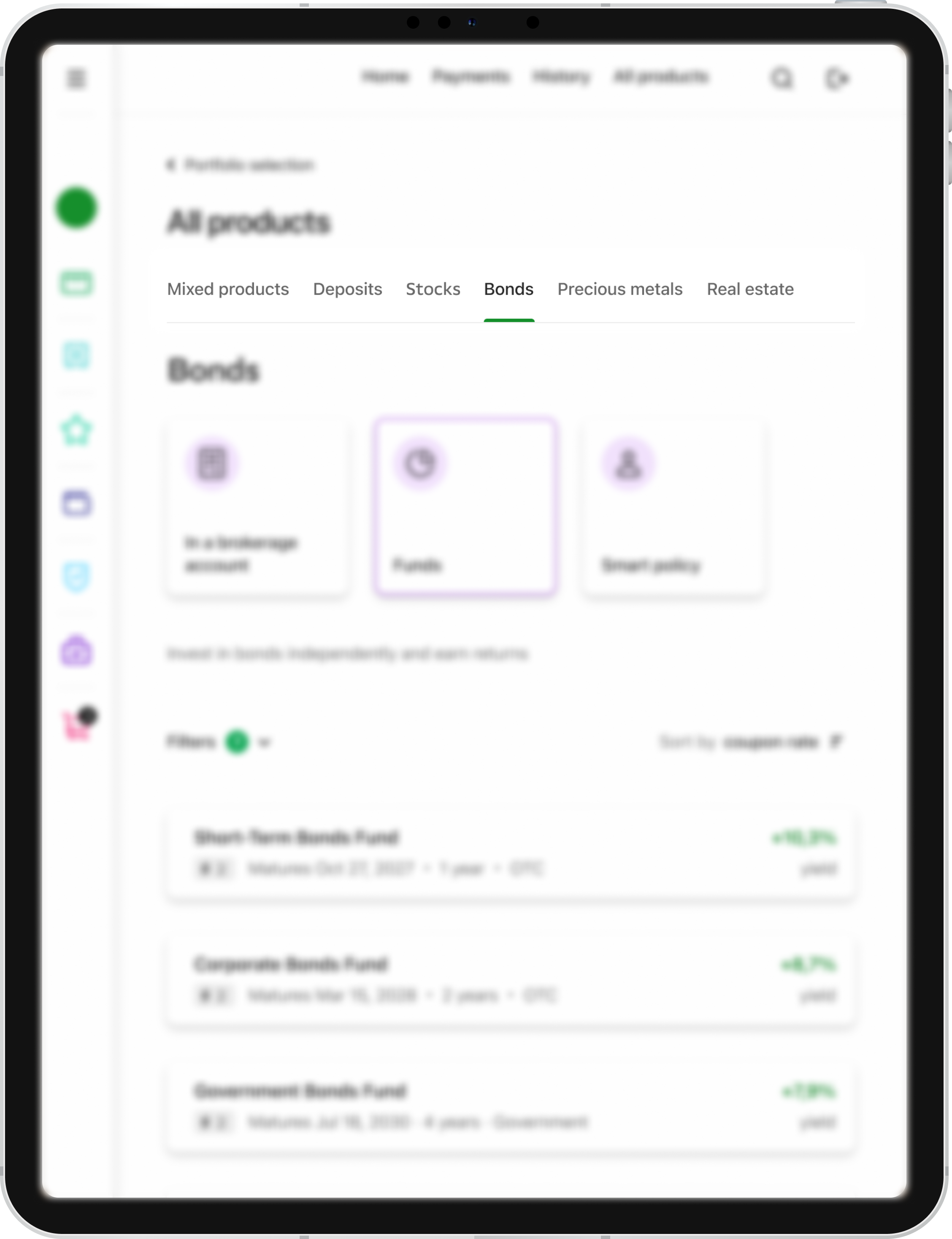
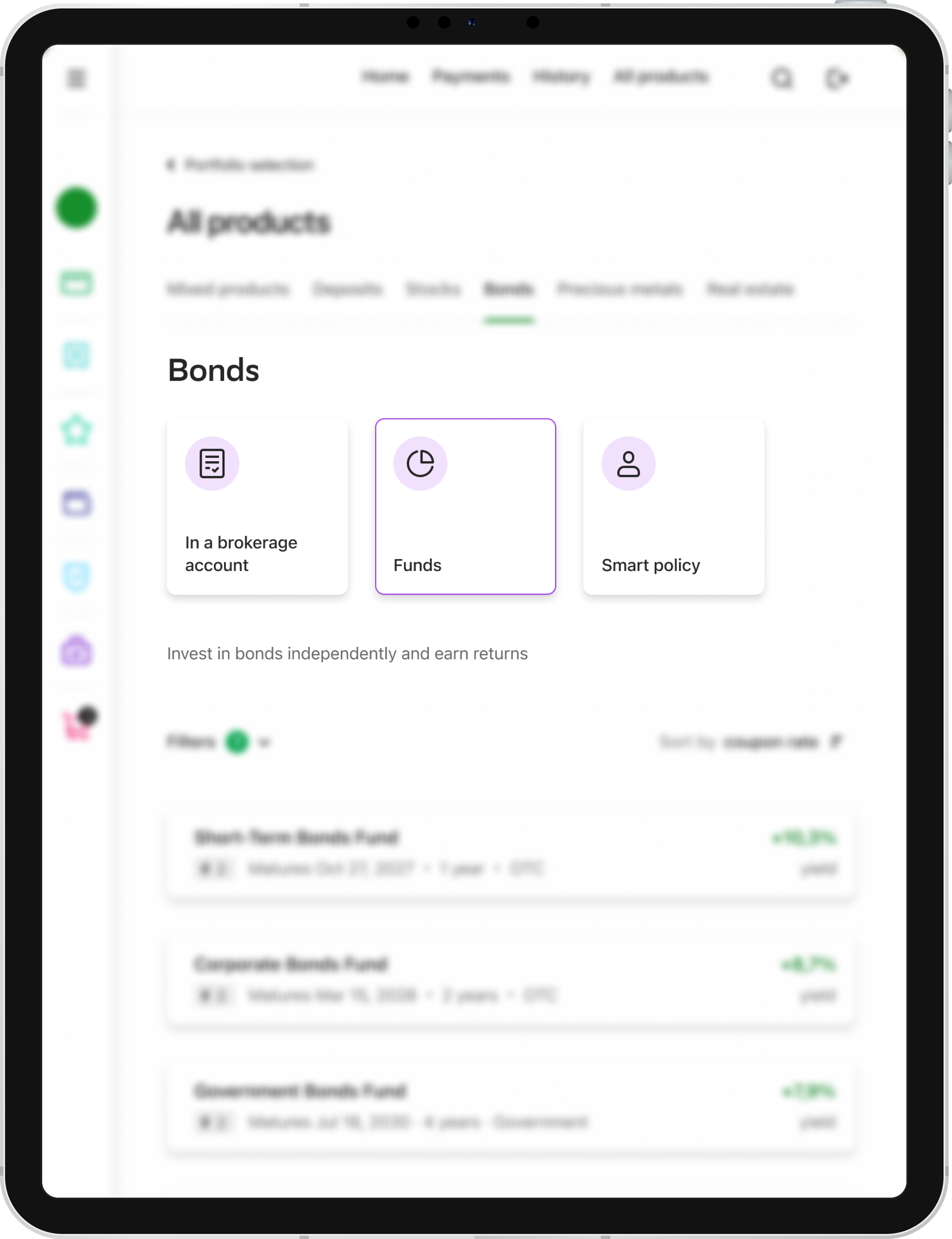
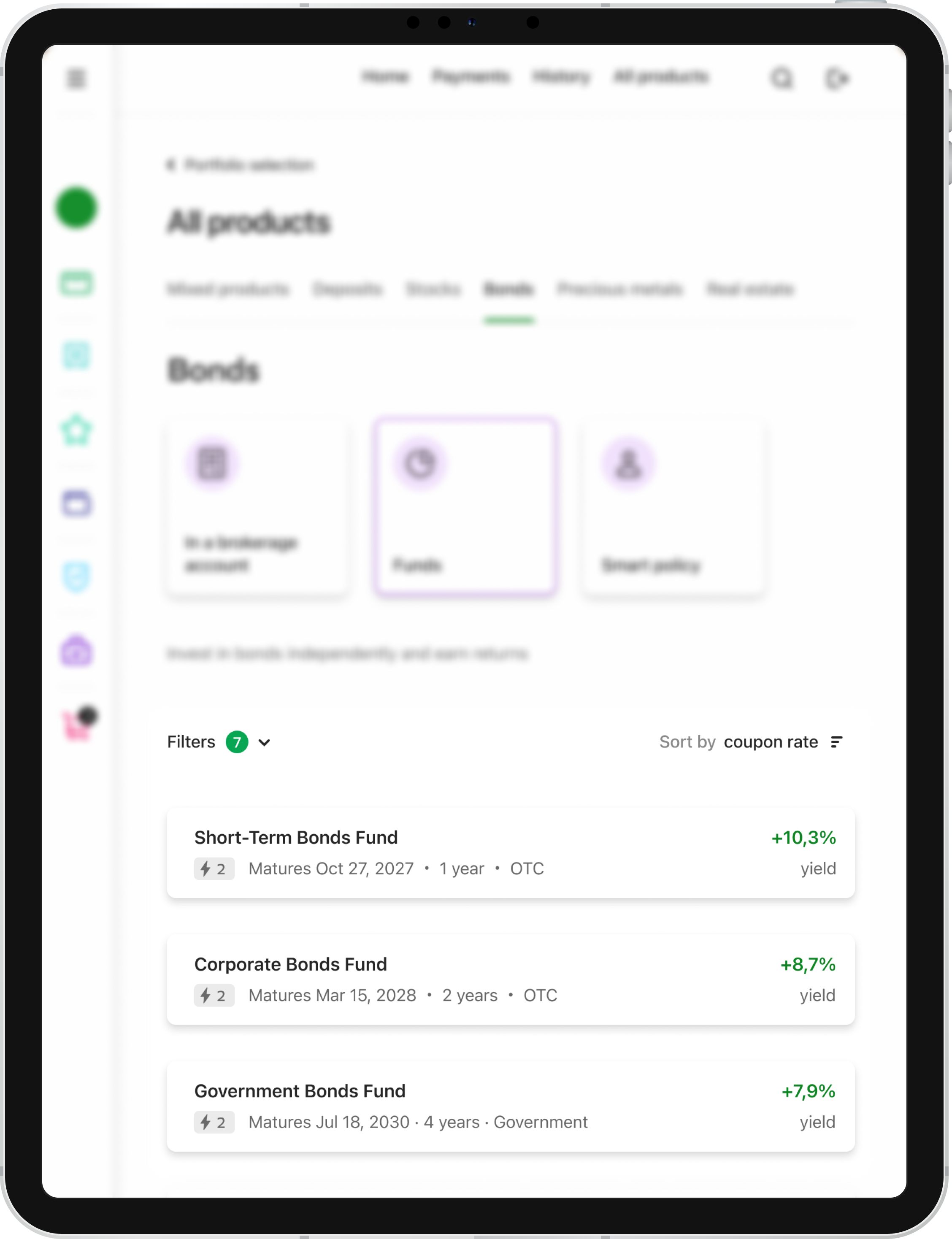
investment catalogue
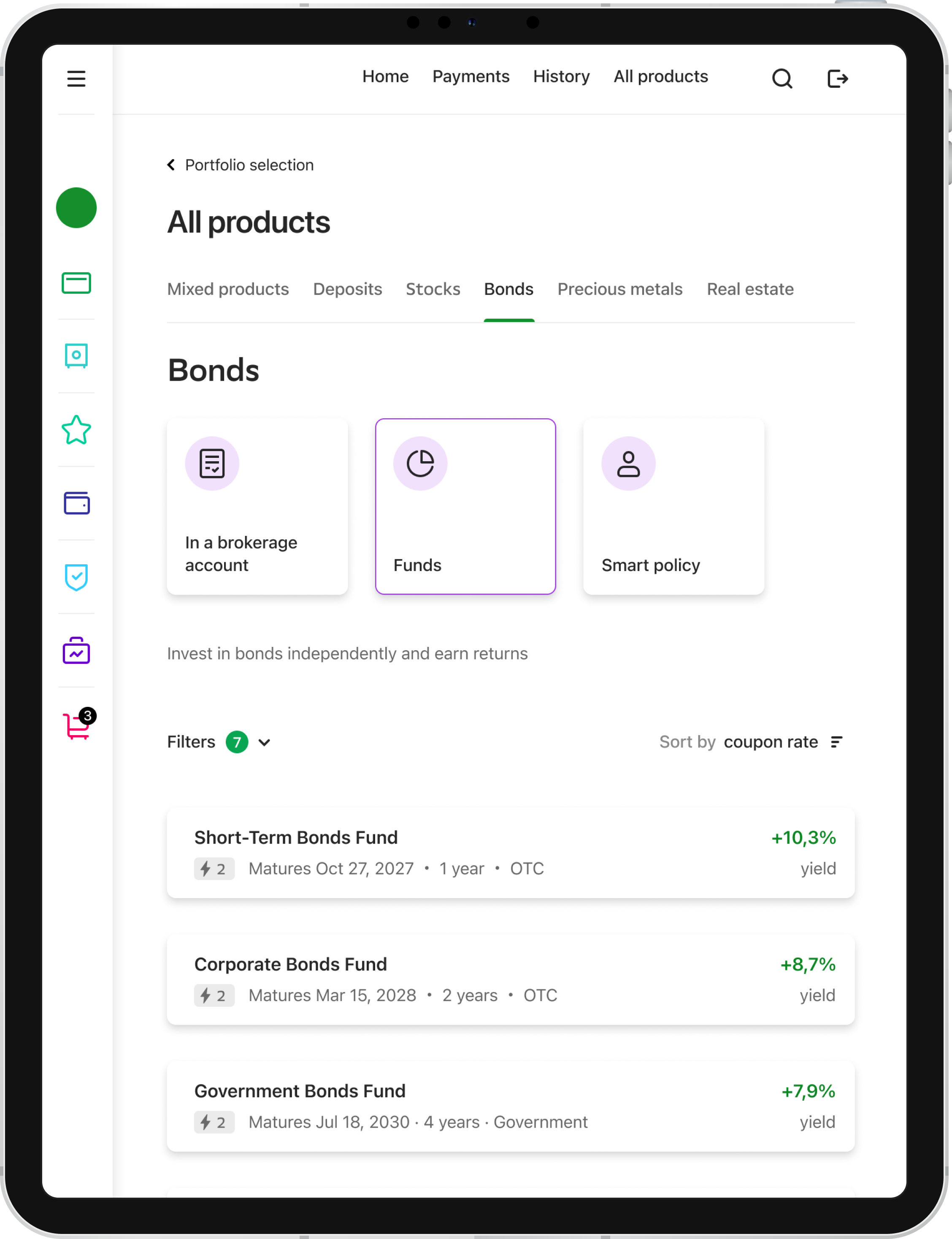
A needed asset class did not correspond to one product type. For example, stock exposure could come through a brokerage account or a fund. Managers considered these routes before choosing a product.
I organised the catalogue around that sequence: asset class → investment method → specific product. This connected product discovery to the portfolio discussion.
what changed in the design
The work extended an existing service around how managers already worked. Each change supported a different part of the consultation: understanding the portfolio, discussing a goal and exploring investment products.
Allocation and diversification added context alongside risk and holdings.
The calculator and Target gave the conversation a visible reference.
Asset class, investment method and product became a clear hierarchy.

Mobile app providing flexible, short-term insurance coverage — even for just 5 minutes